Project essay · fictional station · unfinished on purpose
Orbital Shipyard
The house that is assembled from outside.
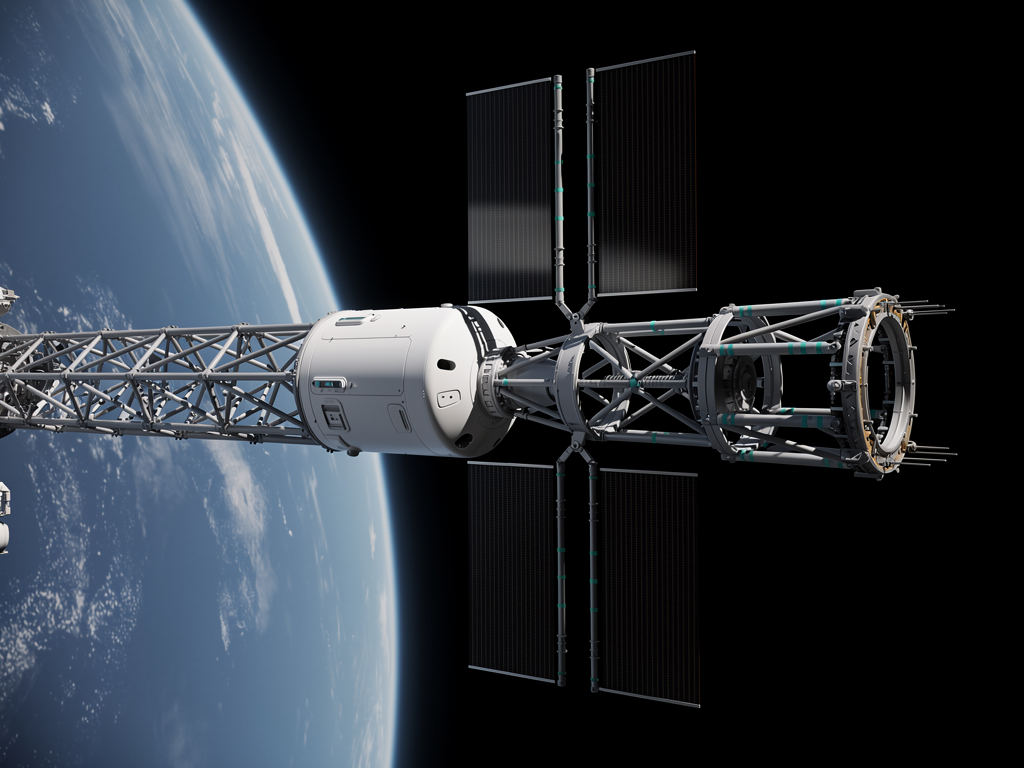
This is an essay about how parts that leave the ground separately — a truss, a module, radiators, a docking ring — become a place where people work and sleep. The hero is not the view of Earth. It is the joint: where systems meet, and where people make them meet.
Status
Concept only. No launch, no operator, no schedule. It is not documentation of any real spacecraft.
Future junction · axis x 60% · unoccupied
The line becomes the spine
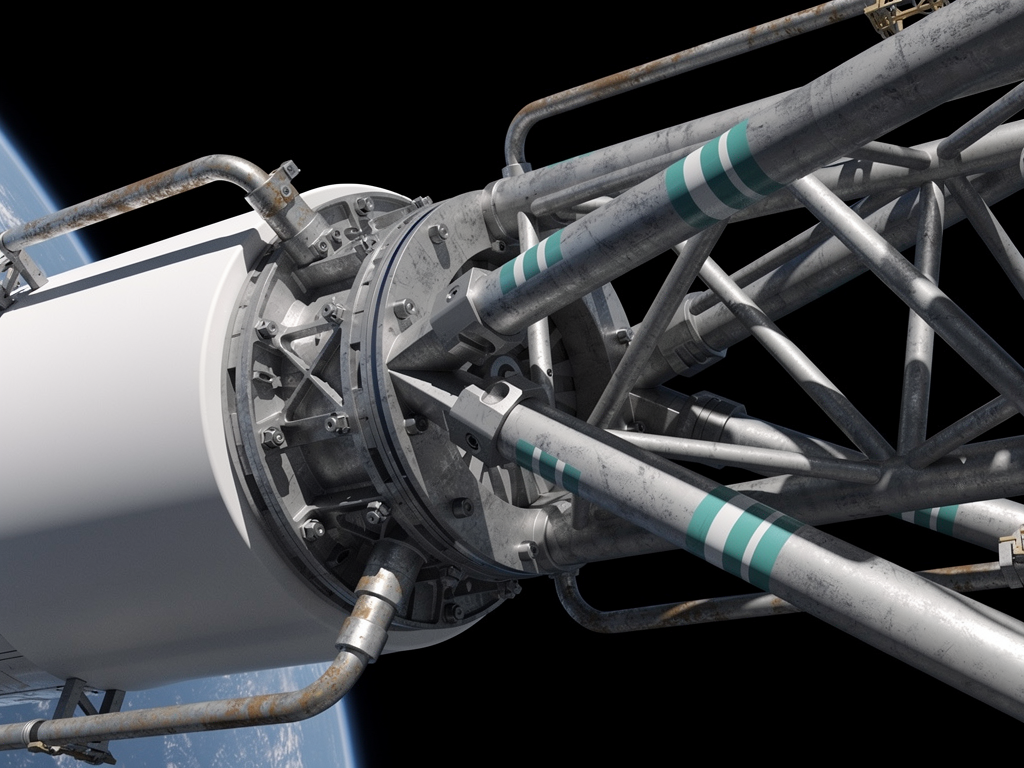
The docking line from the previous chapter continues as the truss: a long lattice that holds radiators, panels and modules at useful distances from one another.
Why a lattice and not a longer hull? Mass placed far from the centre raises inertia, so the station turns more slowly and is harder to steady. A light, stiff truss keeps heavy parts where they are needed while resisting the bending that comes when an engine fires or a vehicle docks.
- Docking loadtravels from the ring into the truss, not into the living module.
- Truss stiffnesslimits how much the radiators wobble after every push.
- Radiator positionsets how far heat has to travel along the structure.
A panel collects, a radiator lets go
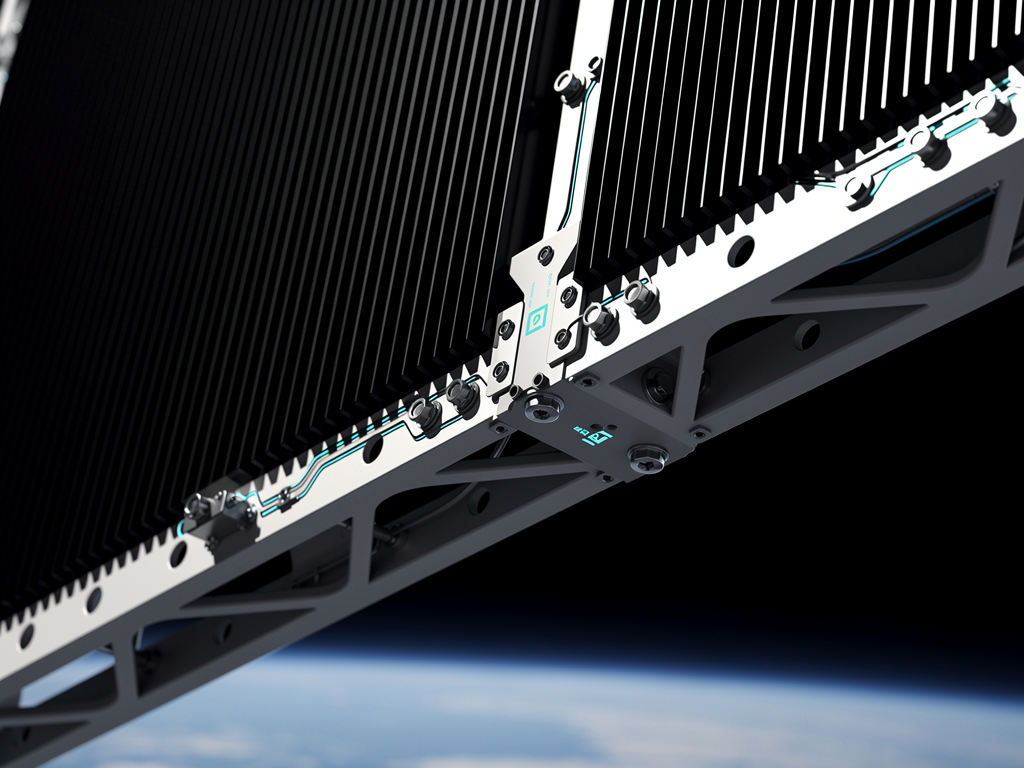
Solar panels turn sunlight into electricity, so they face the Sun. Radiators do the opposite job: they carry waste heat away and shed it into space, so they turn edge-on to the Sun and see as much cold sky as they can.
Every device inside — lights, pumps, computers, people — ends up as heat. Without radiators the station would slowly overheat on its own electricity. Power and cooling are one budget written twice.
- Panel
- faces the light, makes power.
- Loop
- carries heat from equipment outward.
- Radiator
- avoids the light, releases heat.
Inside, the engineering has to go quiet
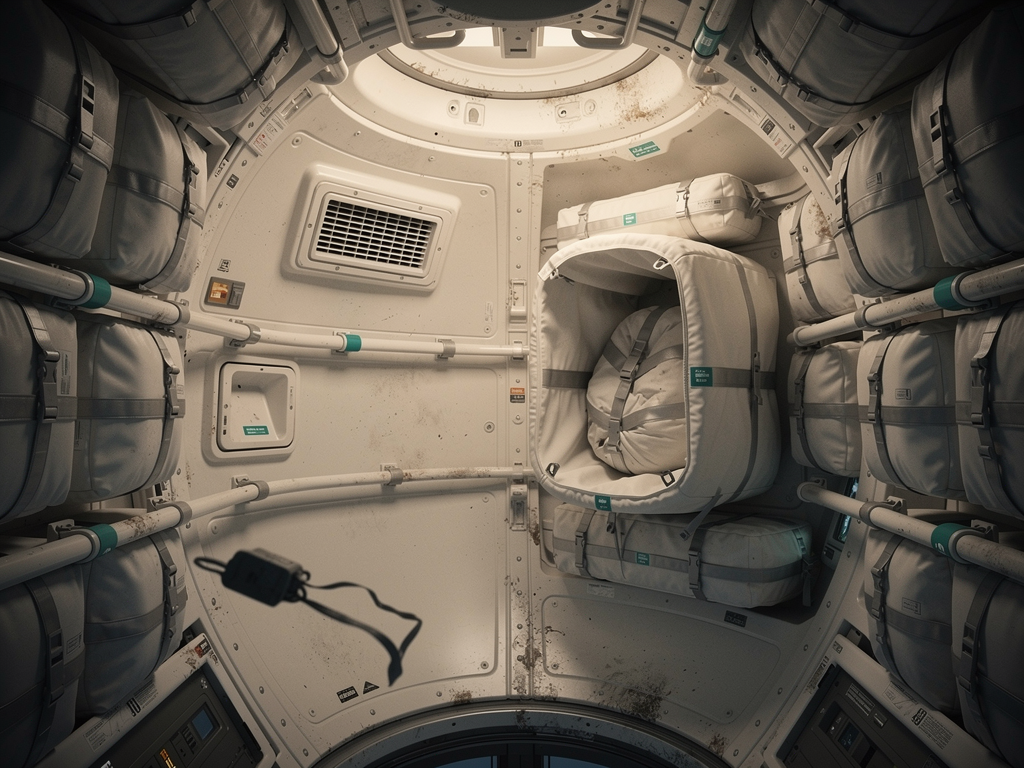
The same cylinder from the fairing drawing, now lived in. Walls become storage, handholds replace furniture, and every surface has to be reachable without a floor.
- Air
- Without gravity, warm air does not rise on its own. Fans move it all the time so exhaled breath does not gather around a sleeping face.
- Noise
- Those fans never stop, so quiet becomes a design material. Mounts, covers and distances decide whether anyone can rest.
- Sleep
- A sleeping place is a small enclosure: a bag tethered to the wall, a door, and its own airflow.
- Storage
- Anything not stowed drifts. Labelled bags, straps and fabric fasteners are how a module stays usable day after day.
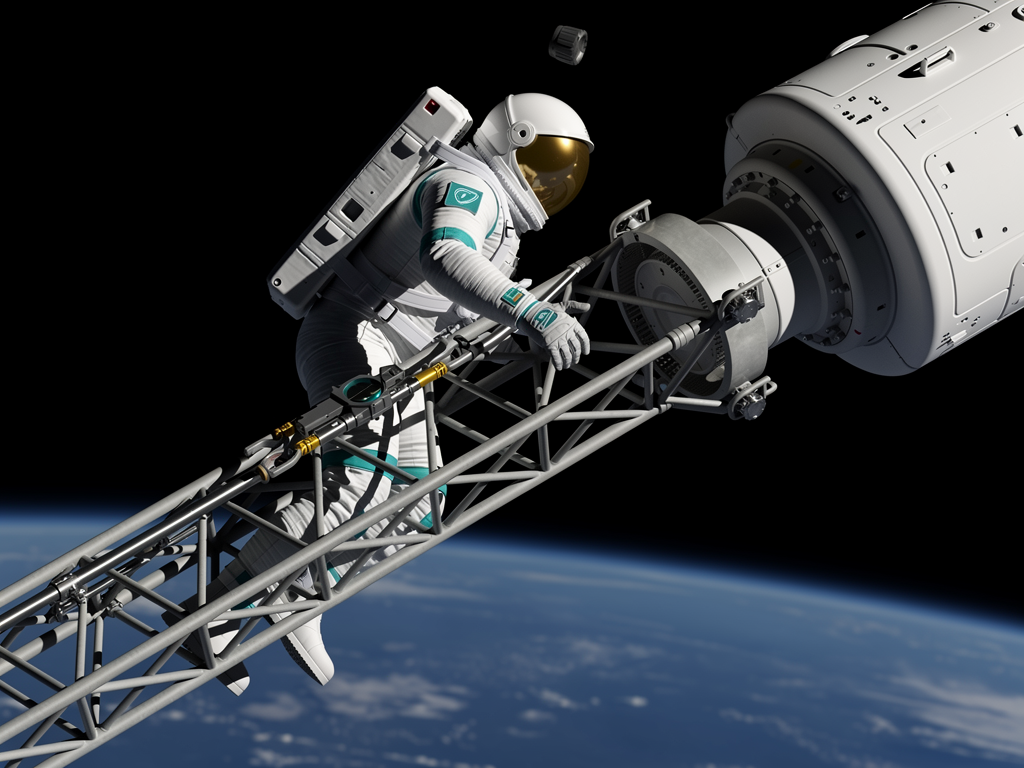
Working outside is working slowly
Some tasks can only happen on the truss: replacing a unit, freeing a latch, routing a cable. Every move outside is planned along handrails, with a tether clipped before a hand lets go.
The outside of the station is designed for this pace. Handrails, foot restraints and oversized fittings are placed where the work is, because a person in a suit cannot improvise a grip.
Why the suit is a small spacecraft
It holds pressure, supplies oxygen, removes carbon dioxide and moisture, and keeps the body from freezing in shadow or overheating in sunlight.
Why gloves set the pace
A pressurised glove resists every bend of the fingers. Tools and fittings are sized for that resistance, which is why external parts look oversized.
Why tethers come first
Nothing outside may drift away, including the person. Staying attached at all times is a habit built into every movement.